Translating Listing Images for Other Marketplaces
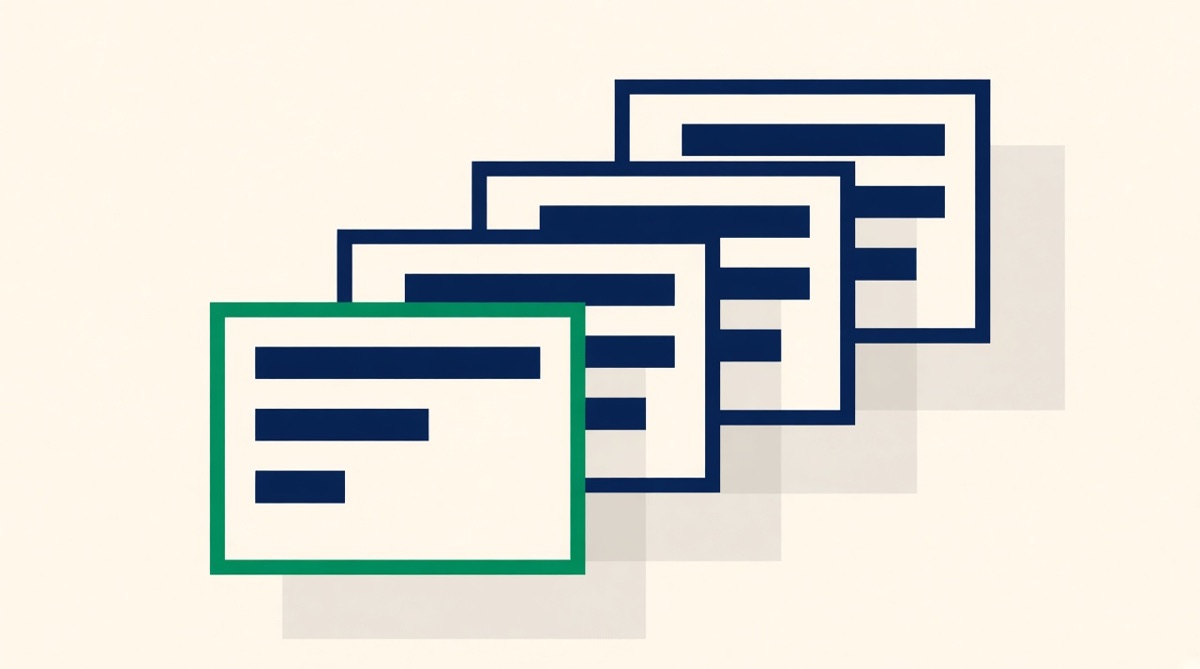
Plan for expansion first: IBM's figures, as published by the W3C, put strings under 10 characters at 200–300% of the English original and strings over 70 characters at about 130% — so headlines break before body copy. Graflio's renderer narrows headlines, steps callout type down to a 16 px floor and re-pairs anchors so leaders do not cross, but below that floor the fix is shorter German, not smaller German. Units, CE and UKCA marks, the GPSR responsible-person block and health or cosmetic claims all change independently of the translation.
Translating a listing image is not a translation job. The words are the cheap part. A square canvas does not stretch, German and French run longer than English, and the shortest strings expand worst — so the headline you were proudest of is the one that breaks. Then there is everything that is not words: units, certification marks, the responsible-person block on your packaging shot, and claims legal in one market and prohibited in the next.
How much longer the text actually gets
The most-cited figures come from IBM's globalization guidelines, reproduced by the W3C in its article on text size in translation, expressed as expansion by the length of the English source string:
| Characters in English | Average expansion |
|---|---|
| Up to 10 | 200–300% |
| 11–20 | 180–200% |
| 21–30 | 160–180% |
| 31–50 | 140–160% |
| Over 70 | 130% |
We left out the 51–70 row: the W3C page prints 151–170% there, which breaks the descending pattern and looks like a long-standing typo. The pattern that matters is the one the W3C spells out — "the smaller the source message, the higher the likely translation length". A six-word headline is the worst case, not the safe one. The same article measures Flickr's translations of "views" and finds German at 2.8 times the English length, French at 2.6. These are averages over European languages published by IBM and carried by the W3C, because IBM's own page is no longer reachable: a planning heuristic, not a measurement of your copy.
What breaks in a fixed square layout
Four things, in order. The headline wraps onto a third line and collides with the product. A callout stack that fitted between headline and footer no longer fits. Parallel leader lines start crossing because their labels moved. And the type shrinks below what anyone can read on a phone.
Graflio's renderer handles the first three mechanically. A wrapping headline is narrowed a step at a time to pull a companion word down; if that adds a line, the font size steps down instead. Each callout column is measured against the space between the headline block and the footer, and if the stack is too tall the title and body sizes step down a point at a time to a floor of 16 px on the 1080-px canvas, then the column is redistributed evenly. Anchors are re-paired with labels afterwards, choosing the arrangement whose leader lines do not cross.
The fourth is not a rendering problem and no tool solves it. Once German body copy sits at the 16-px floor, the honest fix is a shorter sentence, not a smaller one. Write the German; do not translate the English.
What has to change beyond the words
- Units. Council Directive 80/181/EEC requires SI units in the EU. Supplementary imperial indications are permitted, permanently since Directive 2009/3/EC, but Article 3(4) is specific: the metric indication "shall predominate", and non-metric ones "shall be expressed in characters no larger". Inches set larger than centimetres is not a style choice.
- Number formatting. German, French and Spanish use a decimal comma — convention, not law, but "3.5 L" reads as thirty-five in Berlin.
- Conformity marks. CE for the EU. For Great Britain, GOV.UK guidance updated in April 2026 says the UK "continues to recognise the CE marking, alongside or in place of the UKCA marking", and that UKCA may sit on a label or accompanying document "until 11pm on 31 December 2027".
- The responsible-person block. The EU General Product Safety Regulation 2023/988 has applied since 13 December 2024. Article 16(3) puts the responsible operator's name and postal and electronic address on the product, packaging, parcel or an accompanying document. Article 19 makes the online offer show the manufacturer's addresses, the responsible person where the manufacturer sits outside the EU, identification "including a picture of it", and warnings in a locally understood language. A US packaging shot can be wrong for amazon.de.
- Energy labels. Regulation (EU) 2017/1369 requires the label shown visibly "including for online distance selling", and visual advertisements to name the efficiency class and range.
Claims that do not survive the border
This is where a literal translation gets a listing suppressed. For food and supplements, Regulation (EC) 1924/2006 covers claims in "the labelling, presentation or advertising" — an infographic is in scope — and Article 3 extends the rules to claims made "textually or through pictorial, graphic or symbolic representations", so an icon can be a claim. Article 10(1) prohibits health claims unless authorised and on the EU list; Article 10(2) drags four mandatory statements along with any claim you use; Article 12 bans weight-loss rate claims and endorsements by individual health professionals.
In the United States a DSHEA structure/function claim is self-substantiated, notified to the FDA within 30 days and carried with the familiar disclaimer. "Supports immune health" is a normal US supplement caption; its literal German equivalent is prohibited unless authorised in the EU register. Translating a sentence does not translate its legality.
Cosmetics arrive at the same place from another direction. Regulation 1223/2009 Article 20(1) names the media — "text, names, trade marks, pictures and figurative or other signs" must not imply characteristics the product lacks — and Regulation 655/2013 judges a claim against the average end user "taking into account social, cultural and linguistic factors in the market in question". Harmless puffery in English can fail that test once translated.
The three ways to do it in Graflio
| What it does | Cost | Use it when | |
|---|---|---|---|
| Generate in the target language | Copy is written in that language from the start; auto-fit runs on it | In the layout call | Building a locale set from scratch |
| Translate a finished image | An image model redraws the picture with every text translated | 1 credit | A locale you need once, in 13 languages |
| Layerize and retype | Lifts baked-in text into editable objects over a repainted plate | 0.5 credit, edits free | DE and FR, where you pick the shorter word |
Two honest limits. Generating in-language offers Spanish, English, German, French and Italian plus "same language as the listing". The in-place translate covers thirteen languages including Dutch, Polish, Swedish, Turkish, Japanese, Arabic and Chinese, but it is a redraw by an image model, and "keep the layout identical" is an instruction to that model, not a guarantee.
Which route for which marketplace
Amazon's European stores are DE, UK, FR, IT, ES, NL, SE, PL, BE and IE, Ireland having opened on 18 March 2025, and listing in one does not automatically cross-list to the others. Amazon's European selling guide tells sellers to translate products into the local store's language, but we found no published policy requiring the images to be localised — that argument is conversion, not compliance.
Practical rule: build the source set in your strongest market. Localise DE and FR by retyping in layers, because that is where expansion bites. Use the one-credit in-place translation for the long tail — NL, SE, PL. Treat units, marks and claims as a separate pass with a separate reviewer; no translation step catches them.
Common questions
How much longer is German than English?
IBM's published expansion figures, reproduced by the W3C, are given by source length rather than by language: strings up to 10 characters average 200–300% of the original, strings over 70 characters around 130%. The W3C's own measurement of Flickr put German at 2.8 times the English length for "views" and French at 2.6. Plan for the short strings.
Can I reuse my US listing images on amazon.de?
Only after checking three things beyond language. Units must be metric, with any imperial figure set no larger. Conformity marks and the responsible-person details required by GPSR since December 2024 differ. And a structure/function claim legal on a US supplement label is prohibited in the EU unless authorised in the EU register.
Does Amazon require listing images to be in the local language?
We found no published Amazon policy saying so. Amazon's European selling guide tells sellers to translate products into each local store's language, and its image guide is silent on language. Treat localised imagery as a conversion decision, not a stated image rule.
What is the cheapest way to translate a whole image set?
In-place translation is one credit per image, so a six-image set is six credits. Layerizing costs half a credit per image and editing is then free — cheaper for a set you will revise more than once, and better where German or French forces a rewrite rather than a translation.
This page is written by Graflio, so read our own column with appropriate suspicion. Competitor facts are the vendors’ published information as of August 2026 and change often — check before you buy.
Paste one ASIN. Get the whole set.
Graflio reads the live listing and its reviews, studies the best sellers around it, then renders a full set of on-brand infographics — every image still editable in a layer studio. €10 of credits free, no card.
Try Graflio free →