Amazon Listing Images for Outdoor and Camping Brands
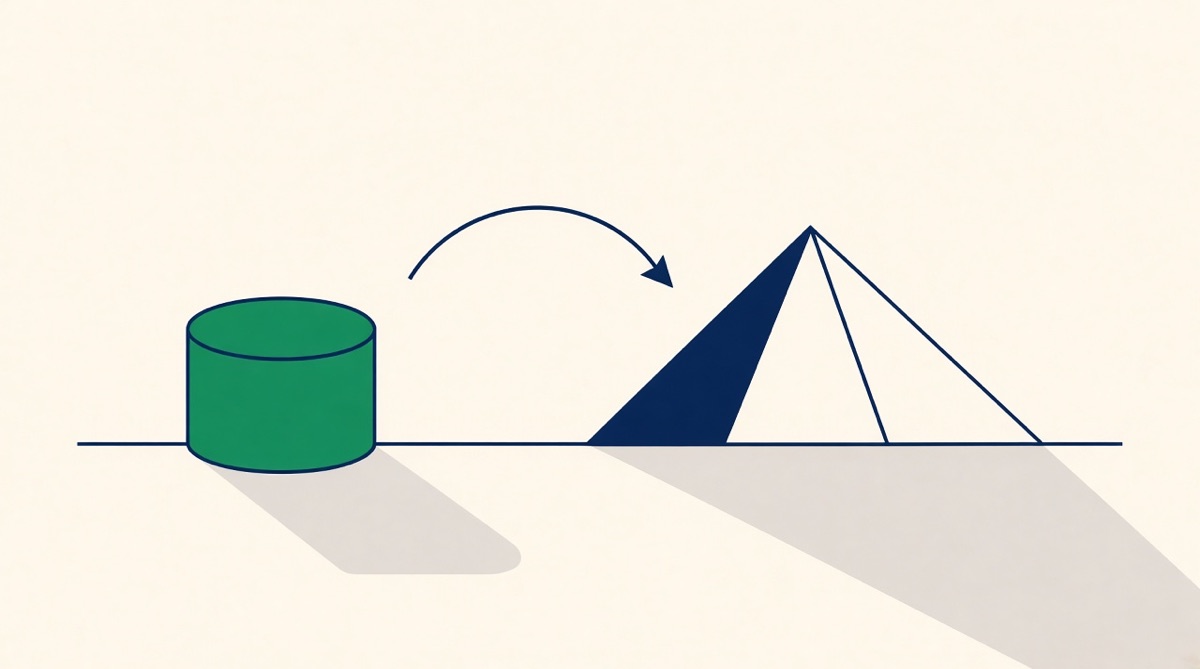
Outdoor buyers decide on four numbers a photograph cannot show, and the standards behind them are less settled than the marketing suggests. Hydrostatic head comes from ISO 811:2018; the familiar 1,500 mm figure is an industry benchmark traceable to ISO 5912:2020's 15,000 Pa tent requirement, not to any law we could find. IPX8 under IEC 60529 is manufacturer-defined and meaningless without depth and duration. Sleeping bags moved from EN 13537 to ISO 23537-1:2022 a decade ago. Ice retention has no standard at all — YETI says so itself.
Outdoor gear sells on four numbers a photograph cannot show: how big it is packed, how big it is pitched, what it weighs, and how much weather it takes. Three of those have real standards behind them and one is quietly manufacturer-defined. The gap between what a rating certifies and what a shopper reads into it is where returns live.
Packed versus pitched is the whole scale problem
Packed size decides whether it fits in a boot; pitched size decides whether it fits three people. Show one and you have answered half the question. Capacity claims carry their own trap: ISO 5912:2020 does not let you simply call a tent a three-person. Sleeping capacity is calculated from coffin-shaped test areas of 195 × 58 cm for lightweight category A tents and 200 × 60 cm for category B — a body outline, not a body plus its kit. Three of those rectangles drawn inside the floor plan tell more truth than any adjective.
Backpack litres have a standard almost nobody cites. ASTM F2153-07(2018) measures capacity with roughly 20 mm spheres and excludes any area not fully enclosed by fabric, so mesh pockets and bottle holders do not count. Compliance is voluntary and unpoliced: Treeline Review measured packs against their claims in April 2021 and found gaps both ways. If your figure is ASTM-measured, say so; few do.
What hydrostatic head actually certifies
Hydrostatic head comes from ISO 811:2018, adopted in Europe as EN ISO 811: a specimen faces rising water pressure until water breaks through in three places. It measures static pressure on new fabric, and says nothing about seams, abrasion or the coating after two seasons.
The familiar 1,500 / 3,000 / 5,000 mm ladder is real but does not come from where sellers say it does. We found no EU or UK law defining "waterproof" by a millimetre figure; retail sources call 1,500 mm an industry benchmark and disagree on its origin. It traces instead to ISO 5912:2020, which sets tent requirements in pascals.
| ISO 5912:2020 requirement | Pa | ≈ mm water column |
|---|---|---|
| Coated flysheet, entry levels | 15,000 | 1,530 |
| Coated flysheet, top levels | 25,000–30,000 | 2,549–3,059 |
| Groundsheet, levels 1 / 2 / 3 | 15,000 / 30,000 / 50,000 | 1,530 / 3,059 / 5,099 |
Two things fall out. The floor must beat the fly at the higher levels, because a groundsheet takes point pressure from knees and elbows: a slot showing only the flysheet rating is showing the easier number. And the 2020 revision deleted the stability requirement because no reproducible test existed, so "wind rated to X km/h" has no ISO behind it. Name whose test it is.
IPX8 is not a number, it is a promise you write yourself
IP ratings come from IEC 60529. The second digit covers liquids; the X in IPX7 means dust was never assessed. IPX7 is fixed and defined: one metre, thirty minutes. IPX8 is continuous immersion "under conditions which the manufacturer shall specify", needing only to be more severe than IPX7.
An unqualified "IPX8" on a headlamp is therefore among the least informative claims here, and an image printing "IPX8 · 2 m · 60 min" beats a rival's bare badge. Above IPX6 the ratings are not a ladder either: jets and immersion are different failure modes, so devices tested for both carry slash notation such as IPX5/IPX7.
Temperature ratings changed name and most listings did not notice
The current sleeping-bag standard is ISO 23537-1:2022. EN 13537 was withdrawn and replaced by EN ISO 23537-1 in 2016, so a listing citing EN 13537 in 2026 is a decade out of date and reads that way.
The 2022 edition defines its figures by posture. Comfort is where a user lying relaxed on their back reaches the threshold of feeling cold; limit is that threshold curled up; extreme is a survival figure where hypothermia becomes possible, and the standard's own note says it can lead to death. Headlining the extreme figure is the most misleading habit here, and it comes back as a review rather than a refund. One more clause belongs on your spec image: the standard sets a total mass tolerance of ±5%. A published weight should survive being weighed.
Ratings that certify nothing
Ice retention days have no standard, and YETI says so on its own FAQ, noting the absence of an industry method and that fixed-day claims reflect test conditions rather than real use. When the category leader disclaims the headline metric, a rival "keeps ice 7 days" badge is a wager, not a spec. Show your conditions instead.
Down fill power has methods but not one method. The IDFB procedure uses a 30 g sample with steam conditioning; the European approach uses 20 g with tumble-dry and rest conditioning. Same down, different numbers. EN 12934 also sets a different composition threshold: European "down" needs at least 60% defined down, US "down" 75% down cluster. State the method beside the figure. Flame retardancy is conditional too: ISO 5912 clause 6.1.1.3 demands testing to ISO 6941 only if you claim it.
What the bestsellers actually do
We went through the sports and outdoors bestseller galleries in our reference set, and the pattern is humbling: almost nobody prints a standard. HEETA's dry bag headlines "PVC Waterproof Material" with no hydrostatic figure and no IP rating, then gives a whole slot to a four-panel "Steps for Usage" sequence teaching the roll-top closure — because rolling the top three to five times is the waterproofing, and a leaking bag is usually a badly closed one. Rainleaf's towel demonstrates absorbency with photographs of a measuring jug rather than a claim. The lesson is not that standards do not matter, but that a demonstration beats an unexplained number and a named test beats both: the roll-top sequence and "ISO 811: 5,000 mm".
Where Graflio helps
- The research pass reads your reviews and your competitors' and surfaces which spec people complain about, tagged by source.
- Callouts anchor to coordinates on the real photo, so a line pointing at a taped seam still points at it after an edit.
- Specs stay editable text layers: correcting a fill-power figure is a retype, not a regeneration.
What it cannot do
- It does not know your hydrostatic head, IP test conditions or fill-power method. Those come from your lab report.
- It will not test anything. A number on an image is a claim you are making, whatever rendered it.
- A field photograph in real weather beats a composited scene, and outdoor buyers spot it.
The five slots that earn their place
- Packed beside pitched, both dimensioned, with a familiar object for scale.
- Weight and capacity to a defensible tolerance: sleeping outlines in the floor plan, or an ASTM-measured litre figure.
- The weather rating with its standard named: ISO 811 in mm, IEC 60529 with depth and duration, ISO 23537-1 with comfort and limit rather than extreme.
- The mechanism — roll-top, taped seam, bathtub floor — demonstrated in steps.
- What is in the box: stakes, guylines and stuff sacks drive missing-parts complaints here.
Common questions
Is 1,500 mm hydrostatic head the legal minimum for "waterproof" in the EU?
We could not find a law that says so. Retail sources describe 1,500 mm as an industry benchmark, not a statutory threshold, and do not agree on its origin. What is documented is ISO 5912:2020, which requires 15,000 Pa — about 1,530 mm of water column — for a coated flysheet at its lower levels. Cite the standard, not a law.
What is the difference between IPX7 and IPX8?
IPX7 is a defined test under IEC 60529: one metre, thirty minutes. IPX8 is continuous immersion under conditions the manufacturer specifies, needing only to be more severe than IPX7. IPX8 alone is therefore not comparable between products, so print depth and duration beside it.
Should I use EN 13537 or ISO 23537 for sleeping bag ratings?
ISO 23537-1:2022 is current. EN 13537 was withdrawn and replaced by EN ISO 23537-1 in 2016, so a 2026 listing citing EN 13537 is a decade out of date. Lead with comfort and limit; extreme is a survival figure the standard says can lead to death.
Can I put an ice-retention claim on the image?
You can, but no standard backs it and the category leader says so publicly: YETI's FAQ notes the absence of an industry method for measuring ice retention. If you make the claim, show the conditions you tested under, not a bare number of days.
This page is written by Graflio, so read our own column with appropriate suspicion. Competitor facts are the vendors’ published information as of August 2026 and change often — check before you buy.
Paste one ASIN. Get the whole set.
Graflio reads the live listing and its reviews, studies the best sellers around it, then renders a full set of on-brand infographics — every image still editable in a layer studio. €10 of credits free, no card.
Try Graflio free →