Amazon Listing Images for Fitness Equipment Brands
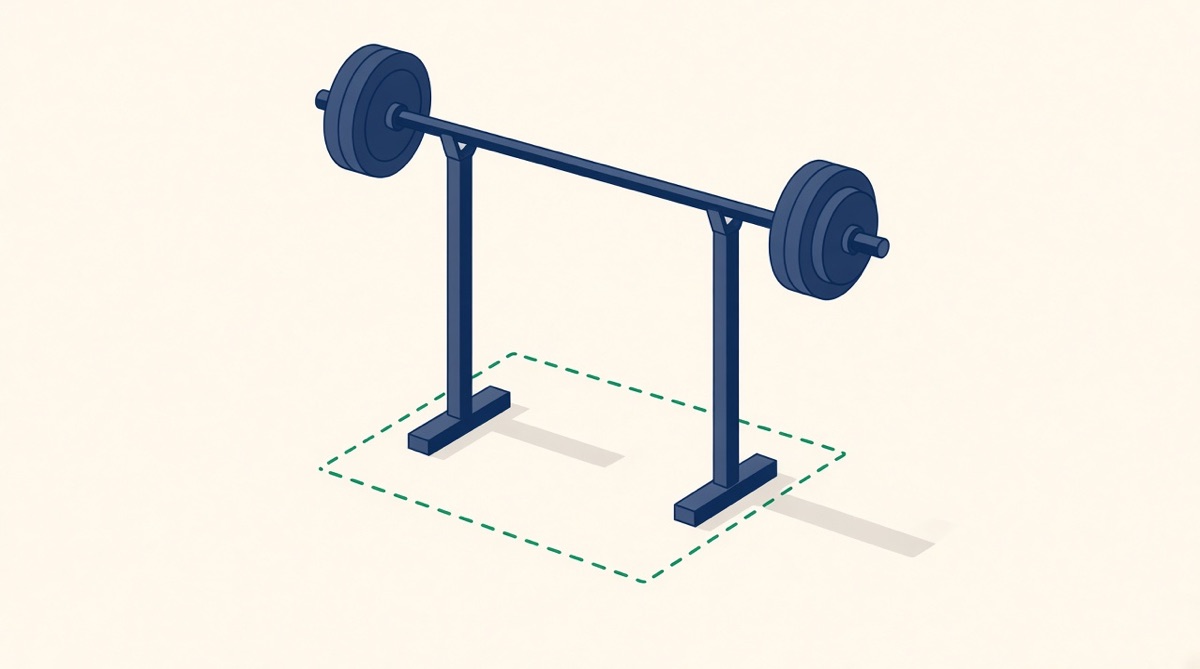
The FTC has already ruled on the claim most weighted-vest listings make. Its Gut Check guidance states that nothing you wear or apply to the skin can cause substantial weight loss — defined as a pound a week for more than four weeks, or more than fifteen pounds total — and its 2022 guidance confirms that listing images count as advertising and that imagery alone can convey an implied claim. Meanwhile the specification that would genuinely help, the maximum training load EN ISO 20957 already requires in your marking, appeared in none of the bestseller galleries we sampled.
Fitness listings sell an outcome, which is precisely where the Federal Trade Commission lives. The FTC has already ruled on the claim most weighted-vest galleries make, and its 2022 guidance confirms that a listing image is advertising and that imagery alone can convey a claim you never typed. Meanwhile the specification that would genuinely help a buyer — the maximum training load your own standard requires on the product — appeared in none of the bestseller galleries we sampled.
What the bestsellers publish, and what they leave out
Amazon Basics does the simplest thing available: the weight is moulded into the dumbbell, so "10LB" reads at thumbnail size without a graphic layer at all. One slot is then given entirely to a plain side elevation with 4.02 in and 8.6 in on measure bars and nothing else in the frame — two decimal places, no styling, no headline. Fit Simplify sells its resistance bands on an ordinal scale printed on the product itself: five bands running X-Light to X-Heavy, each carrying a filled-dot indicator, so a flat lay communicates the whole range in one image.
Now the omissions. Fit Simplify publishes no force figure anywhere — the dots are relative, not measured, and nothing tells you what "Heavy" pulls at. And the sports and outdoors top twenty we sampled contains no large equipment at all: no rack, no bench, no treadmill. Which means that in our sample nobody publishes a load rating and nobody publishes a footprint plan. That is a gap rather than a category norm, and if you sell anything with a floor area it is the most obvious opportunity on this page.
The claim that gets you in trouble is the one on the vest
Zeerun's weighted vest gives slot two to three icons: Burn Calories Faster, Boost Muscle Strength, Increase Metabolic Rate. Physiological claims, unsourced, on a product worn on the body. The FTC's Gut Check guidance lists among seven claims that are always false that a product causes substantial weight loss by being worn on the body or rubbed into the skin, and defines substantial weight loss as a pound a week for more than four weeks or more than fifteen pounds in total. It adds that the claim can be suggested through dress size, inches or body fat rather than stated — so a silhouette comparison does the same damage as a sentence.
The December 2022 Health Products Compliance Guidance closes the remaining gaps. Substantiation for health benefits will generally need randomised, controlled human clinical testing. Advertising expressly includes packaging and labelling, internet and digital content, and social and influencer marketing — your gallery and your A+ modules are advertising. And imagery alone can imply a claim: the guidance's own example is doctors in white coats, molecular structures and a stack of medical journals conveying that a product is clinically proven.
What to show instead
| The claim | What it would need | What to show instead |
|---|---|---|
| "Burn calories faster" | Competent and reliable evidence, generally clinical testing | The added load in kg, and let the buyer infer |
| "Lose inches by wearing it" | Nothing substantiates it — the FTC has ruled it out | Cut it entirely |
| A before-and-after body shot | Substantiation plus a disclosure of the expected result | A use-case grid — Zeerun runs four modalities in one frame |
| "Heavy duty" | A number | Maximum training load, which your marking already carries |
| "Professional grade" | A class | The EN ISO 20957 usage class: S studio, I rehabilitation, H home |
| Lab coats and molecular graphics | They imply clinical proof on their own | The product in the condition where the feature matters |
That last row has a good example in the same gallery. Zeerun photographs its reflective stripes at dusk, under the caption "Make It Safer for Early Morning or Evening Walks". The feature is demonstrated in the only light where it means anything. ZELUS goes further, running pixel-anchored callouts across a night scene — 360° reflective strips, arm pocket, back storage — with a cut-out phone showing what actually fits in the pocket.
Load ratings and what EN ISO 20957 actually requires
The current general part is EN ISO 20957-1:2024, the third edition, which replaced the 2013 version when that was withdrawn on 31 December 2024. It classifies equipment on two axes: accuracy classes A, B and C, and usage classes S for studio, I for rehabilitation and special needs, and H for home. There is no accuracy class D, whatever a competitor's comparison table says.
Two definitions are worth lifting into your images. The standard defines body mass as the maximum specified user mass in the user's manual, or 100 kg, whichever is greater. And it defines maximum training load as the load specified by the manufacturer in the user's manual and in the marking. If the figure is already required on the product, leaving it out of the gallery is a decision, not an oversight. The standard's numeric load-test multipliers sit behind its paywall, so treat any competitor quoting a specific multiple with care — we are not going to quote one either.
The compliance slot, and when it is theatre
ZELUS gives a whole slot to photographs of framed SGS test reports, headed "Verified by SGS for Chemical Compliance Under Both EU REACH and US CPSIA", with a second line about California Proposition 65 standards for lead, cadmium and phthalates. It is a genuinely good idea, executed clearly — and one third of it does not apply. 16 CFR 1307.3 prohibits eight phthalates above 0.1%, but only in children's toys, meaning products designed for play by a child of twelve or younger, and in child care articles for children of three and under. An adult weighted vest is neither. The REACH and Proposition 65 halves of that report are doing real work; the CPSIA half is decoration. If you spend a slot on a test report, caption each line with what it actually covers.
Where Graflio helps
- Callouts anchor to coordinates on the real product photo, so a line pointing at a buckle or a reflective strip still points at it after an edit.
- Load figures, class letters and dimensions are text layers, so a spec correction is a retype rather than a re-render.
- The research pass reads the listing and its reviews, which is where complaints about assembly and footprint already live.
- The real product photograph is composited rather than generated, so the equipment in the frame is the equipment you ship.
Where you still need people
- Graflio has no compliance checker. It will not flag "burn calories faster" or ask whether you hold a clinical trial.
- Nothing in it decides whether your maximum training load figure is correct — that is a test result, not a design asset.
- A large piece of equipment usually needs a real photograph in a real room; a footprint plan is a drawing job.
- One brand kit per account and no bulk generation in the interface, so a wide range is one pass per SKU.
What to build first
- Delete the physiological claims. Start by removing anything you would not hand a regulator a study for.
- Publish the load. Maximum training load and usage class, in the gallery, because they are already in your marking.
- Draw the footprint. Nobody in our bestseller sample does, and it is the question every buyer with a spare room asks.
- Caption every compliance mark with what it covers. Half an acronym stack usually does not apply to your product.
- Demonstrate features in their conditions. Reflective strips at dusk, grip in a sweaty hand, folded size beside a door.
- Respect the scale rule. Amazon requires images to represent real scale, quantity and colour, with multi-piece sets kept relative in size — and tag any photorealistic AI-generated people with "contains-synthetic-performer" before upload.
Common questions
Can I say a weighted vest burns more calories?
Only with competent and reliable evidence, which the FTC says will generally mean randomised, controlled human clinical testing. And you may not claim substantial weight loss from wearing a product at all — the FTC lists that among seven claims that are always false. Substantial means a pound a week for over four weeks, or more than fifteen pounds total.
Are listing images really covered by FTC advertising rules?
Yes. The 2022 guidance defines advertising to include packaging, labelling, internet content, social media and influencer marketing, and warns that imagery alone can create an implied claim — white coats and molecular graphics being its own example of implied clinical proof.
What load rating should I put in my images?
The maximum training load. EN ISO 20957-1:2024 defines it as the load specified in the user's manual and in the marking, and defines body mass as the maximum specified user mass or 100 kg, whichever is greater. If it must be on the product, it belongs in the gallery.
Does CPSIA apply to my yoga mat or resistance bands?
For phthalates, not if you sell to adults. The eight-phthalate limit applies to children's toys for under-thirteens and child care articles for under-threes. Adult equipment falls outside it, which makes a CPSIA badge on an adult product largely decorative — the REACH and Proposition 65 lines on the same report are the useful ones.
How should I show the size of a piece of equipment?
As a measured drawing. Amazon requires images to represent real scale, quantity and colour, and multi-piece products to stay relative in size. Amazon Basics gives a whole slot to a bare side elevation with 4.02 in and 8.6 in on measure bars — no product in our sample published a footprint plan, which is the gap worth filling.
This page is written by Graflio, so read our own column with appropriate suspicion. Competitor facts are the vendors’ published information as of August 2026 and change often — check before you buy.
Paste one ASIN. Get the whole set.
Graflio reads the live listing and its reviews, studies the best sellers around it, then renders a full set of on-brand infographics — every image still editable in a layer studio. €10 of credits free, no card.
Try Graflio free →