Amazon Listing Images for Apparel Brands
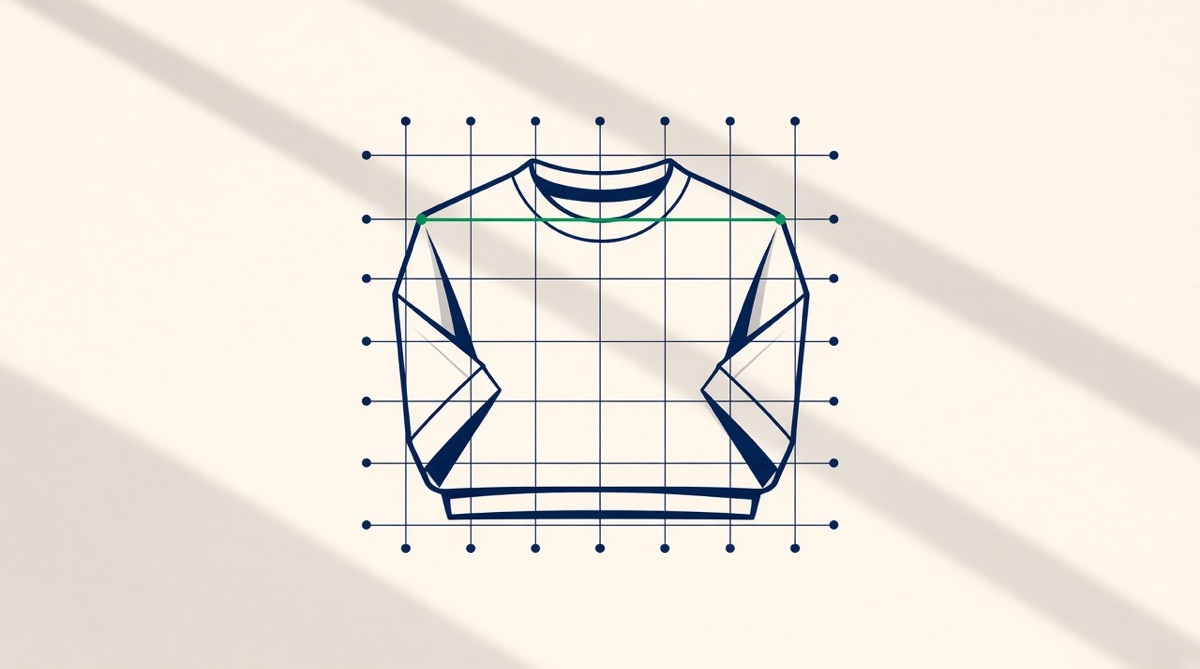
Apparel is the one category where we will send you elsewhere for half the job: if you need a garment on twelve different bodies, Pic Copilot and Caspa AI do that better than we do, and it is not close. What is left is the half that stops returns — the size chart, the fibre composition, the fit-and-care block. State in the chart itself whether the numbers are body or garment measurements, because that single ambiguity causes more apparel returns than any styling decision. In the EU, Regulation 1007/2011 Article 16(1) requires fibre composition to be clearly visible before purchase, including online.
Apparel is the one category where we will send you to a competitor for half the job. If what you need is your garment on twelve different bodies, AI model generation has genuinely caught up, and Pic Copilot and Caspa AI do that better than we do. What is left over is the half that actually stops returns: the size chart, the fibre composition, the fit-and-care block. Those are argument images, not photography, and that is the part worth reading on.
Where AI model generation has genuinely won
Pic Copilot, owned by Alibaba, builds its fashion product around exactly this. Its own fashion page advertises virtual try-on, AI model swap, fashion reels and dedicated shoe and accessory shots, with more than 160 models across four major skin tones. There is a free tier; third-party review round-ups in 2026 put the paid tiers in the region of $8 to $15 a month, though we could not read the figures off Pic Copilot's own pricing page, which renders them dynamically. Treat those numbers as approximate and check them before you budget.
Caspa AI comes at it from photorealism rather than volume, generating lifestyle imagery with human and animal models. As of August 2026 its pricing page lists Starter at $39 a month for 500 credits, Growth at $66 for 1,000 and Scale at $166 for 2,500, with roughly a third off on annual billing and no free tier.
Against a real model shoot, both are dramatically cheaper and faster, and for a catalogue of basics where you need the same tee on six body types, that is not a close contest. Two cautions that no vendor page will give you. A generated model is a representation of fit, and if the garment has been draped rather than measured, you have illustrated a fit you cannot guarantee — which is the exact failure the rest of this page is about. And Amazon's position on misleading imagery does not soften because the misleading part is a body rather than a product.
What Amazon actually requires of an apparel image
Amazon's fashion imaging guidance is more prescriptive than the general rules. Adult apparel is expected to be shown on-model; kids, baby, accessories, multipacks and sets are expected off-model. Where a human model is used, they should be standing rather than sitting, kneeling or lying down, and the styling should not compete with the garment.
The general main-image rules still apply on top: pure white, RGB 255,255,255, product filling roughly 85% of the frame, no text, logos, watermarks, borders or props. Amazon's stated floor for the zoom function is 1,000 px on the longest side, with 1,600 px or more recommended and 10,000 px the maximum. Gallery images, unlike the main image, may carry text — which is the entire opening for everything below.
The size chart is the highest-value image in the category
One ambiguity causes more apparel returns than any design decision: whether the numbers are body measurements or garment measurements. "Chest 102 cm" means one thing if it is the wearer's chest and something quite different if it is the flat garment measured across and doubled. Say which, in the image, in words, every time.
Three more rules that come out of building these at thumbnail size. A grid legible on a phone runs to roughly six columns by eight rows; past that, split it into two images by fit type or by garment block rather than shrinking the type. Give the model's height and the size worn as a caption on at least one lifestyle image — "model is 178 cm, wearing M" is the cheapest return-prevention line in apparel and it costs a caption, not a photograph. And keep Amazon's structured size chart populated regardless, because an image cannot be read by the size filters or the fit widget; the image is for the human, the structured data is for the platform.
Fibre composition is not optional in the EU offer
Regulation (EU) No 1007/2011, Article 16(1), requires textile fibre composition descriptions to be easily legible, visible and clear, and clearly visible to the consumer before the purchase, including where the purchase is made by electronic means. That is a legal reason for the composition to sit inside the offer rather than only on the sewn-in label. On a phone, the offer is the gallery plus a bullet list that truncates, which is why a composition block in an image is worth building rather than assuming the attributes cover you. In the US the equivalent regime is the Textile Fiber Products Identification Act and 16 CFR Part 303, which governs the label itself.
A composition slot that works carries four things: the fibre breakdown with percentages, the weight in gsm, the stretch direction if there is any, and the care symbols. That is a diagram, and diagrams are where a layered editor earns its place — when your mill changes the blend from 95/5 to 92/8, you retype a text layer instead of regenerating an image and hoping the rest of it survives.
What the returns figures agree and disagree about
Published 2026 estimates of the online apparel return rate cluster somewhere between 20% and 30%, with one widely repeated figure for US online apparel and footwear at 23.4% and some category round-ups stretching the band as wide as 20–40%. Estimates of how much of that is caused by size and fit run from roughly 44% to roughly 53% depending on the study, and footwear-specific research goes higher still. These sources disagree with each other and their methodologies are not comparable. What none of them disputes is the ranking: size and fit is the largest single cause, by a distance, in every study we found.
Three tools, three different jobs
| Graflio | Pic Copilot | Caspa AI | |
|---|---|---|---|
| Garment on a model | Not what it does | Core product, 160+ models | Photoreal human models |
| Size chart image | Built from listing data, editable | Template-driven | Not the focus |
| Composition and care block | Layered diagram | Possible manually | Possible manually |
| Callout pinned to a seam | Pixel-anchored to your photo | Placed by the model | Placed by the model |
| Editing text later | Retype the layer | Varies by output | Varies by output |
| Entry cost | €10 of credits, no card | Free tier; paid roughly $8–15/mo | No free tier; Starter $39/mo |
Prices are as published in August 2026. Caspa's are from its own pricing page; Pic Copilot's are from third-party round-ups because its pricing page did not render figures for us.
Where Graflio wins
- Size, composition and care diagrams that stay editable when the spec changes
- Callouts anchored to coordinates on your own flat shot, so the line on the flatlock seam stays there
- Reading the actual fit complaints in your reviews before deciding what the chart must say
- Re-typesetting the same chart for amazon.de, .fr and .es without redrawing it
Where they win
- Pic Copilot and Caspa AI both beat us outright on getting a garment onto varied bodies, and it is not close
- Pic Copilot's free tier is a lower entry point than any paid credit
- A real fit model and a real photographer still beat every generated body for a hero image
- No compliance checker exists in Graflio; nothing verifies your main image or your claims
Which to pick
Most apparel sellers should run two tools, not one. Get the on-model imagery from Pic Copilot or Caspa AI, or from a real shoot if the brand justifies it, and build the size, composition and care images separately, where editability and accuracy matter more than photorealism. If your catalogue is pure fashion basics and you genuinely never need a diagram, you probably do not need us — say so to yourself before you spend anything. And if your reviews are full of "runs small", no model generator on earth fixes that; a corrected chart with body-versus-garment stated explicitly does.
Common questions
Is AI model generation good enough for Amazon apparel listings in 2026?
For many catalogues, yes. Pic Copilot advertises more than 160 models across four major skin tones with virtual try-on, and Caspa AI generates photoreal human models. The limit is not realism, it is honesty: a draped rather than measured garment illustrates a fit you cannot guarantee, and Amazon's misleading-imagery position applies to bodies as well as products.
Should my size chart show body or garment measurements?
Whichever you use, state it in the image itself. This single ambiguity causes more apparel returns than any styling decision, because "chest 102 cm" means one thing as a wearer's measurement and something else as a flat garment measured across and doubled. Many sellers publish both, in clearly separated columns.
Do I have to show fibre composition in the listing, not just on the label?
In the EU, effectively yes. Regulation (EU) No 1007/2011 Article 16(1) requires the fibre composition to be clearly visible to the consumer before the purchase, including where the purchase is made electronically. Bullet points truncate on mobile, so a composition block inside a gallery image is the reliable way to satisfy the intent as well as the letter.
Can an image replace Amazon's structured size chart?
No. Amazon's size filters and fit widgets read the structured data, not your JPEG. Build both: the structured chart for the platform, the image for the shopper who is scrolling the gallery on a phone and never opens the size chart link.
This page is written by Graflio, so read our own column with appropriate suspicion. Competitor facts are the vendors’ published information as of August 2026 and change often — check before you buy.
Paste one ASIN. Get the whole set.
Graflio reads the live listing and its reviews, studies the best sellers around it, then renders a full set of on-brand infographics — every image still editable in a layer studio. €10 of credits free, no card.
Try Graflio free →