Graflio vs Hiring a Freelance Designer for Amazon Images
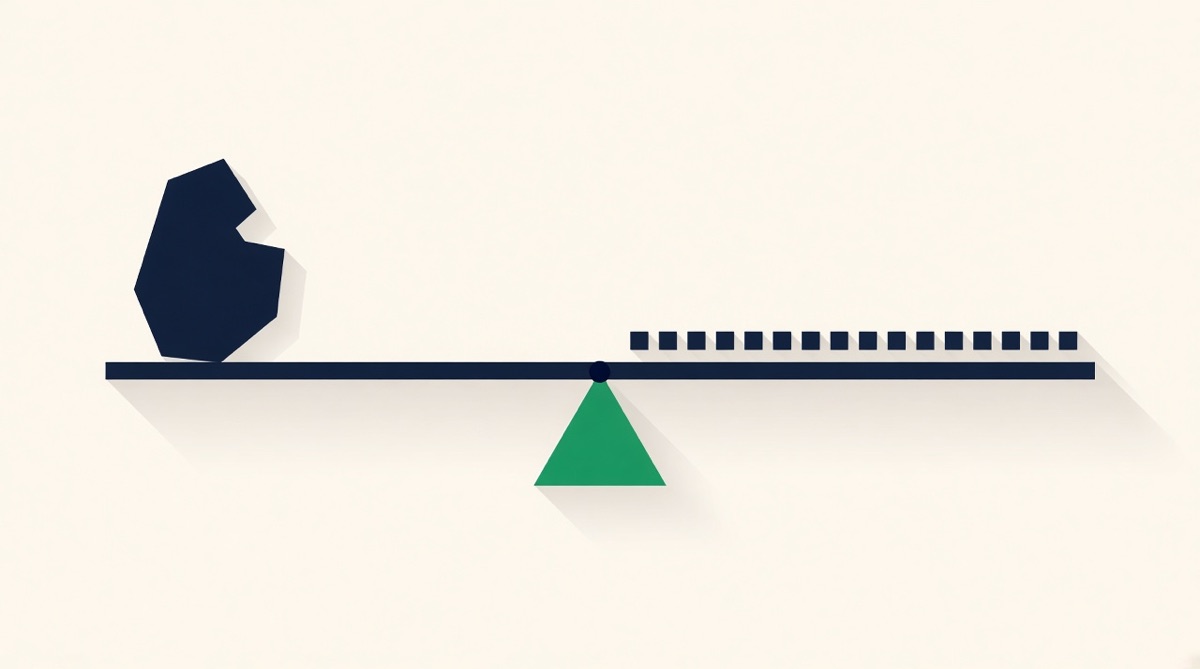
A good designer beats any tool on one hero image with real art direction, and taste is not something software has. Tools win on repetition: per-image cost, cross-catalogue consistency, and a research pass that reads your reviews before anything is drawn. One flagship product, custom illustration or a difficult retouch: hire a designer. Twenty or more SKUs on one visual system, or many expected revisions: use a tool. Most brands end up paying a designer once for the hero and the system, then applying that system with software.
A good designer beats any tool on a single hero image, and it is not close. Real art direction — deciding what to leave out, what to exaggerate, how the thing should feel — is a skill, and software does not have taste. What software has is consistency, speed and a research pass, and those matter more once you are building forty images instead of one. This page is about where that crossover sits.
What a freelancer actually costs in 2026
Fiverr is the floor and the number most sellers benchmark against. Gigs for Amazon infographics and listing images advertise from $5, $10 and $15 as of August 2026, and the same marketplace carries premium Amazon infographic gigs listed from $125. That spread is not noise: it is the difference between a template swap and a designer who will read your product page.
Upwork is the higher-trust tier. Upwork's own hire pages put Amazon Seller Central consultants at roughly $28 to $98 an hour, and a real posting from 8 August 2026 for "A+ & Product Images Design for Amazon" carried a $140 fixed price. For a full seven-image set with A+ modules, budgeting somewhere between $150 and $500 is realistic on Upwork, and agencies sit above that again.
Graflio's cost is easy to state because it is per action: €10 of credits on signup with no card, then €49.99, €199.99 or €499.99 a month for 150, 875 or 2,850 credits. Research costs 0.1 credit; a finished image costs one to three credits depending on the model. A six-image set is normally €2 to €6 of credits.
Do not stop at those numbers. The fee is the smallest part of a freelance engagement.
The costs that do not appear on the invoice
You write the brief. That is the part sellers underestimate: telling a stranger what your product is, who buys it, what the six images should say and why, and doing it well enough that they do not guess. A good brief for a full set is an hour of your time minimum, and a bad one is three rounds of revisions.
Then the loop. Most gigs at the low end include one or two revisions; anything structural after that is a new order or a negotiation. Add time zones. A two-day turnaround with two revision rounds is a working week in practice, and that is when everything goes right.
Then consistency. Six images from one designer usually hold together. Six images ordered three months apart, or forty images across a catalogue from three different sellers, usually do not. Keeping a brand coherent across a catalogue is a systems problem, and it is the problem freelance engagements are worst at.
And the one nobody prices: the designer has not read your reviews. They do not know that a third of your one-star reviews mention the lid seal, or that the category leader undercuts you by €7 and leads with a warranty badge. They will design what you tell them to design, beautifully.
Head to head
| Graflio | Freelance designer | |
|---|---|---|
| Cost per image | €0.33–€1 in credits | $5–$15 budget, $30–$125+ mid to premium |
| Turnaround, first draft | Minutes | 1–3 days typical, plus revision rounds |
| Who writes the brief | The research pass, from your listing | You |
| Has read your reviews | Yes, that is the input | Only if you paste them in |
| Art direction and taste | None. It has rules, not judgment | The entire point of hiring one |
| One outstanding hero image | Competent | Better, clearly |
| Rescuing a bad source photo | Limited | Retouching is a real craft |
| 40 SKUs on one visual system | Brand kit applied across the set | Expensive and drift-prone |
| Revisions | Unlimited, you edit the layers | 1–2 included, then billable |
| Accountability | None. It is software | A person who answers for the result |
Where Graflio wins
- Per-image cost, by an order of magnitude, once volume is more than a handful
- The brief writes itself from the listing, reviews and category best sellers
- A brand kit holds a catalogue together without re-briefing anyone
- Edits are free and instant because output is layers, not a flat JPEG
- Amazon rules are encoded: pure white main image, ~85% frame fill, no text on the main
Where a freelancer wins
- Taste. A designer knows what to leave out; a tool does not
- One hero image with real art direction, every time
- Custom illustration, unusual concepts, anything that has not been done before
- Retouching and compositing a difficult or poorly lit source photograph
- Interpreting a vague brief and coming back with something better than you asked for
- Accountability: a person you can hold to a result, which software cannot offer
Where the crossover actually sits
Roughly: under five SKUs, a good freelancer is competitive on both price and quality, and clearly better if the work is brand-defining. Past twenty SKUs, per-image economics and cross-catalogue consistency dominate everything else, and hand-building forty sets is how a brand ends up looking like eleven brands. Between five and twenty, it depends on whether your images need taste or need evidence.
The hybrid most brands land on is worth saying plainly: pay a designer once, properly, for the hero image and the visual system. Then run the rest of the catalogue through a tool that respects that system. The system is the expensive part; repeating it is not.
How to decide
- Is this one flagship product you will build a brand on? Hire a designer. Pay properly. Do not optimise this decision.
- Does the image need an idea, or does it need evidence? An idea, a metaphor, an unusual concept: a person. A dimension diagram, a comparison table, a what's-in-the-box: evidence, and a tool does that faster and cheaper.
- Is your source photography weak? A retoucher can rescue it. No tool can. Fix the photograph first, whatever else you decide.
- How many revisions do you expect? If the answer is more than two, per-revision billing will cost more than the original order, and layered output you can edit yourself is worth more than the fee difference.
- How many SKUs this year? Count honestly, then multiply by six images and by the freelance rate. That number is usually what decides it.
Both can be right in the same business, in the same quarter, for different products. Anyone who tells you a tool always wins this comparison is selling you the tool.
Common questions
Is Graflio cheaper than a Fiverr designer?
Per image, yes, by a wide margin. Fiverr Amazon infographic gigs advertise from $5 to $15 at the budget end and from $125 for premium gigs as of August 2026, while a six-image Graflio set typically costs €2 to €6 in credits. The comparison only means something at volume, though: for one image, the fee difference is smaller than the value of good art direction.
When is hiring a freelancer clearly the right call?
When the image needs an idea rather than a fact. A brand launch, a hero image that has to carry a category, custom illustration, or a difficult retouch on the only photograph you have. In those cases a good designer beats any tool, and paying $125 or $300 for one image that works is a rational purchase.
How much do Amazon listing designers charge on Upwork?
Upwork's own hire pages report roughly $28 to $98 an hour for Amazon Seller Central consultants. Fixed-price postings vary widely; one real listing on 8 August 2026 for A+ and product image design was posted at $140. For a full set with A+ modules, $150 to $500 is a realistic range on Upwork, with agencies higher again.
Can I use both?
That is the pattern most brands settle on. A designer builds the hero image and the visual system once; the tool applies that system across the rest of the catalogue. Graflio's output is layered, so a designer can open a generated set and fix the last ten per cent by hand rather than starting over.
Does a tool understand Amazon's image rules better than a freelancer?
Usually, yes, and that is a low bar rather than a boast. The main image must be on pure white with the product filling roughly 85% of the frame, at least 1000px on the longest side for zoom with 1600px or more recommended, and free of text, logos and props. A designer who works on Amazon daily knows all of this. A general graphic designer often does not, and rejected main images are the most common avoidable cost in a cheap gig.
This page is written by Graflio, so read our own column with appropriate suspicion. Competitor facts are the vendors’ published information as of August 2026 and change often — check before you buy.
Paste one ASIN. Get the whole set.
Graflio reads the live listing and its reviews, studies the best sellers around it, then renders a full set of on-brand infographics — every image still editable in a layer studio. €10 of credits free, no card.
Try Graflio free →